
60%
Lower integration costs through the use of reusable EAN modules
50%
EAN can help reduce maintenance costs compared to traditional web service architectures

Better performance in large graphs and when processing large files compared to the competition
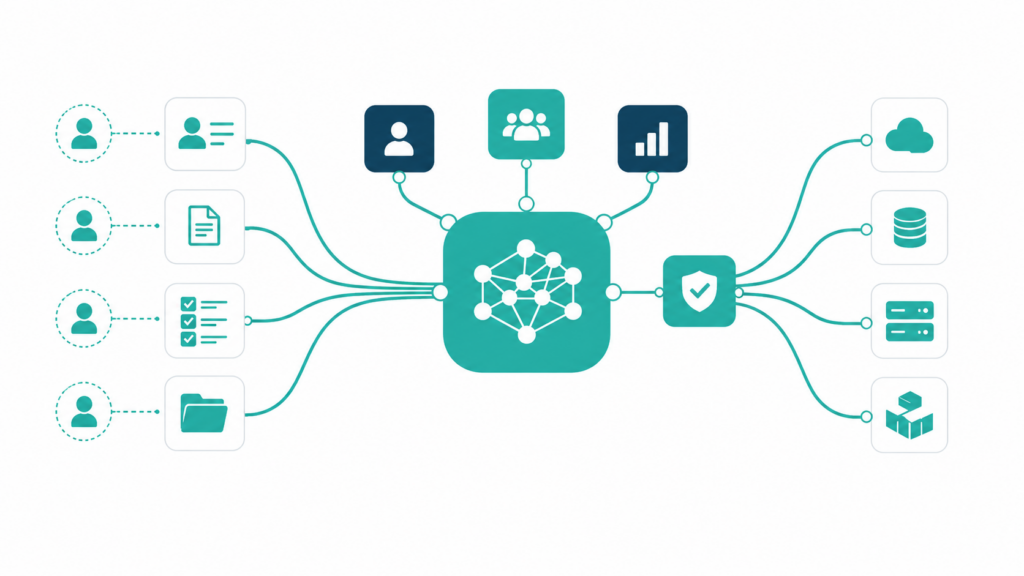
What are nodes, edges, and graphs?
Using a graphical editor, automation pipelines can be assembled from reusable functional building blocks—known as nodes—and executed directly. Nodes are self-contained processing units with typed inputs and outputs. They are connected to one another via edges, and data transformations can be defined directly within the connection. Multiple nodes form a graph—a fully modeled, executable pipeline. Conditional branches and a step-by-step debug mode allow for complete control over the workflow.
How is AI integrated into the automation platform?
EAN brings AI directly into the workflow: Nodes and graphs can be generated using natural language descriptions. AI nodes enable the use of large language models with tool/function calling, vector databases for semantic search, and persistent conversation history for multi-stage AI workflows. External AI models can dynamically call graphs and nodes via the Model Context Protocol (MCP).
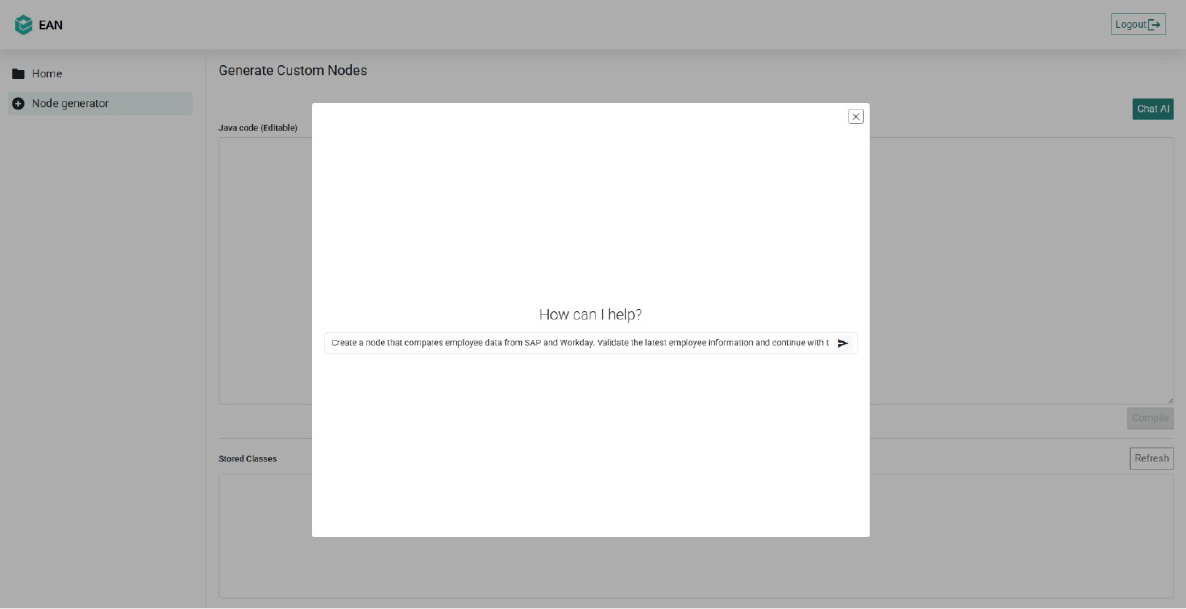
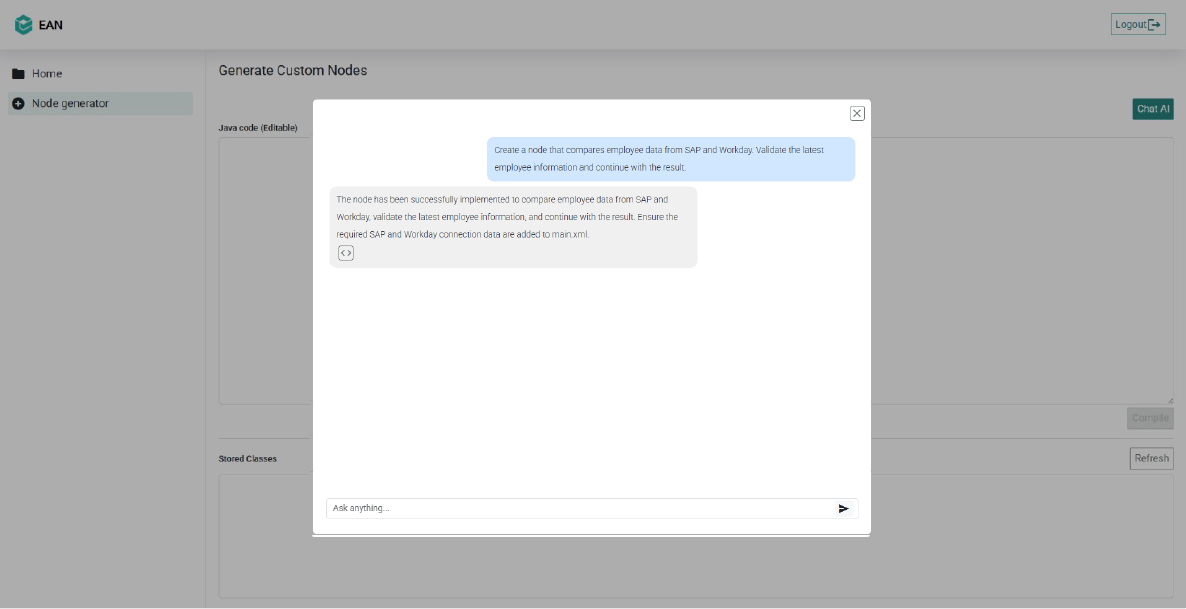
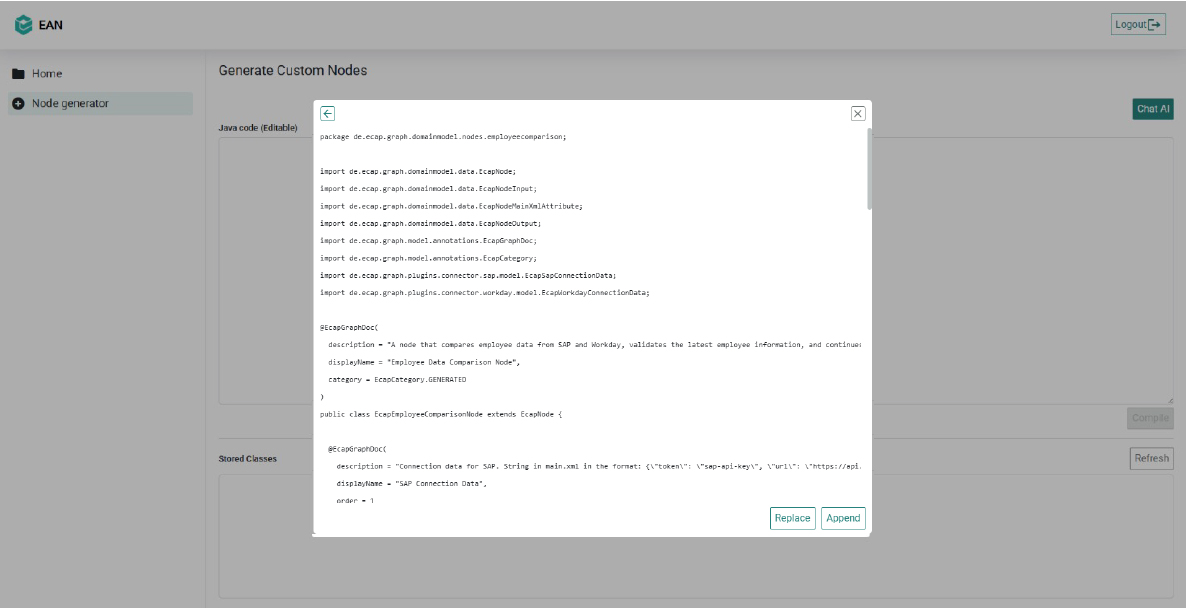
ESCRIBA Enterprise Agent Network: Enterprise-ready and scalable
ESCRIBA’s AI automation platform is multi-tenant, built using a REST API-first approach, and can be integrated into existing enterprise infrastructures without vendor lock-in. Every operation is fully traceable—with a node-level audit trail and versioned graph definitions. Thanks to the reusability of individual building blocks, the system can be easily scaled without compromising performance. In addition, EAN performs particularly well with large graphs and when processing large files.
What problems does ESCRIBA EAN’s AI-powered automation solve?
Enterprise processes are complex—and, until now, expensive to implement:
- Every workflow requires custom development. Multi-step processes such as loading → transforming → enriching → storing → notifying data require custom development work each time.
- Enterprise systems do not communicate with each other. Databases, document repositories, ERP systems, and AI services are not inherently connected.
- Business logic is constantly changing. Hard-coded pipelines are fragile and expensive to maintain.
- No transparency in the event of an error. When a pipeline breaks, troubleshooting without dedicated tools is complicated and time-consuming.
These are the benefits of EAN
- Faster implementation – Existing nodes are reused and combined into new workflows using a graphical editor, without any boilerplate code.
- Full control and transparency —every execution can be tracked in real time: results, timestamps, and status at the node level, plus step-by-step debugging.
- Flexible and low-maintenance —business logic is defined in the graph, not in the code. Graph definitions are versioned and can be migrated.
- AI-ready – AI nodes, semantic search, LLM integration, and MCP support are core components of the platform.
- Enterprise-ready – multi-tenant, REST API-first, no vendor lock-in, complete audit trail.
An AI Automation Platform as a Strategic Advantage for Your HR Digitalization
The ESCRIBA Enterprise Agent Network is more than just an AI-powered automation platform. It is the foundation for an agile, integrated, and future-proof system landscape in HR and beyond—one that grows with your needs.
Thanks to the ESCRIBA Enterprise Agent Network, wait times for backend resources are significantly reduced, projects are implemented more quickly, and project durations are shortened. In addition, workflows can be built, optimized, and automated without any programming knowledge.
From Traditional Web Services to Flexible Agent Networks
Traditional backend architectures follow a rigid three-tier model:
| Shift | Function | Problem |
|---|---|---|
| 01 Charging Adapter | Import data from external sources | Tight coupling, low reusability |
| 02 Processing | Transformation & Validation Based on Business Logic | Complex dependencies, high maintenance effort |
| 03 Write Adapter | Output to Target Systems & Databases | Limited flexibility & scalability |
How AI-Powered Automation Works with ESCRIBA EAN – Function Blocks & Agent Networks
At the heart of ESCRIBA’s AI automation platform are two types of function blocks that can be flexibly linked together:
| Connectors | Logic components |
|---|---|
|
|
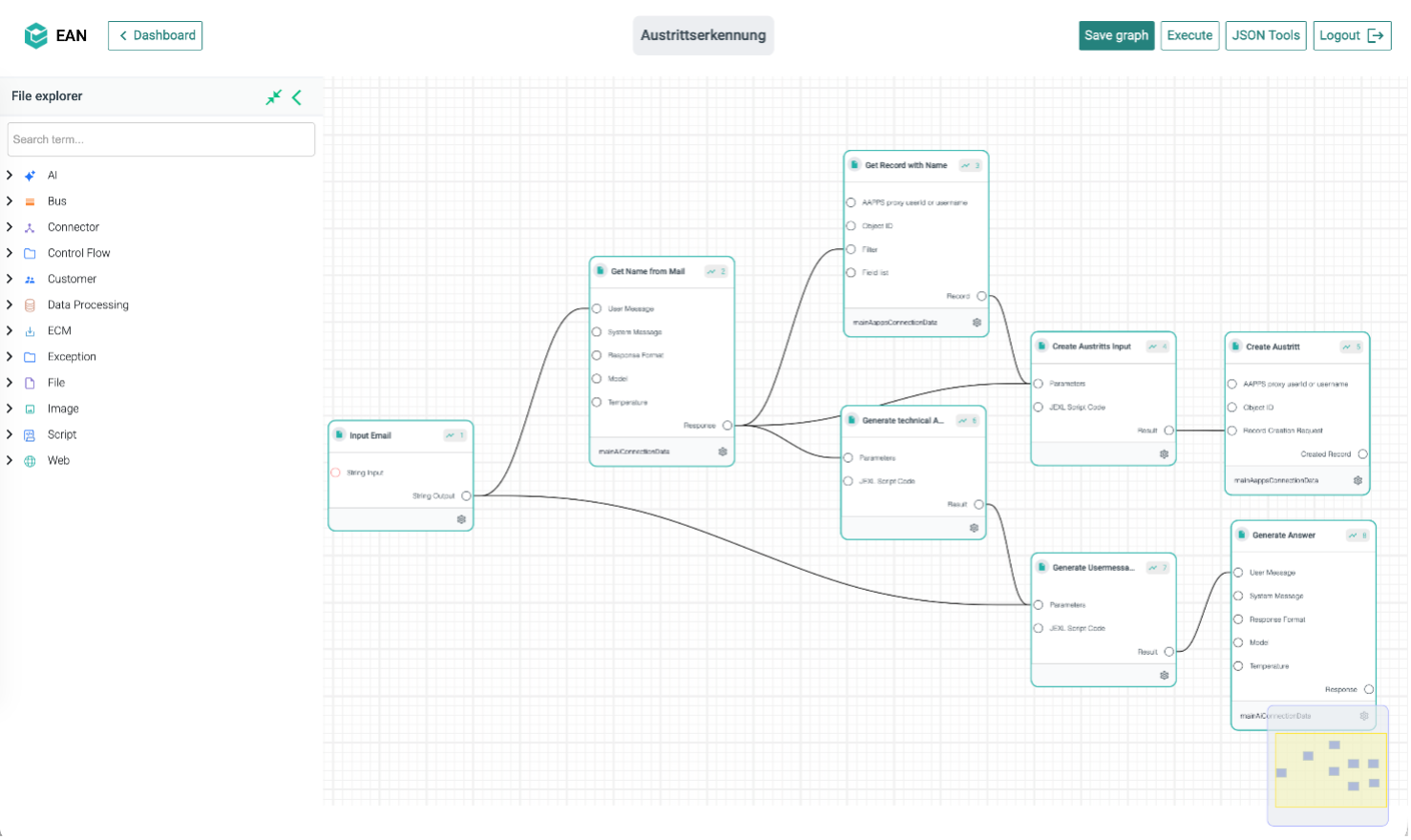
These building blocks are flexibly linked in agent networks—similar to visual workflow tools. Networks can reference other networks (nested execution) and be accessed via the REST API or the MCP protocol.
The Graphical Editor – Visual Programming Without Deep Code
The EAN Editor offers an intuitive drag-and-drop interface for creating logic networks:
| Visual Modeling Create, configure, and visualize logic networks using function blocks and connections—intuitive rather than text-based. | Live Debugger Integrated process-level debugger—quality assurance without QA specialists, directly during the design phase. |
| Building block library Categories: AI, Bus, Connector, Control Flow, Data Processing, ECM, File, Image, Script, Web and more. | AI Extension AI blocks can be integrated as independent, modular building blocks – classification, forecasting, automated validation. |
Real-World Example: Smart Barcode Import
This example shows how EAN gradually and flexibly expands a seemingly simple document process—without changing existing building blocks:
| Level | Requirement | EAN Solution |
|---|---|---|
| 1 | Scan Barcode & File Document | Barcode scanner → Find target person → Save to file |
| 2 | You can also pick up the document | + Add the “Upload Document” module |
| 3 | Accessing Specific Documents in SAP via ArchiveLink | Branch: Standard Path + SAP Path in Parallel |
| 4 | Scanned documents without a readable barcode | + OCR module + AI document analysis (only if needed) |
| 5 | Bulk Documents: One PDF, Multiple People | + “Split PDF” → Loop through all subdocuments |
Each extension simply adds new building blocks—existing processes remain unchanged.
Additional HR Use Cases
| Use Case | Description |
|---|---|
| HR Agent | Chat-based querying and maintenance of HR data (e.g., in SAP). Enables employees to access their own information and maintain data using natural language. |
| Chat Integration / Personnel File | AI answers questions about documents in personnel files—in compliance with the GDPR. Documents no longer need to be reviewed manually. |
| Document Assistance | Automatic background verification of case documents. Approval processes are only authorized if the documents are valid—manual checks are no longer necessary. |
| Document Generation | Automated creation of HR documents from structured data—contracts, references, and certificates. |
| HR Assistant | AI-powered assistant for providing knowledge and support in day-to-day HR tasks—a help bot for employees and HR teams. |
Features & Benefits at a Glance
Features | Benefits |
|---|---|
|
|
Integration & Market Standards
Each configured agent network automatically supports the industry standards REST API and MCP protocol:
- REST API – A standards-compliant interface for your own applications and external tools
- MCP Protocol – Official AI protocol for native access by AI tools (e.g., Microsoft Copilot)
Data Sovereignty & Security
Data sovereignty remains entirely in-house. For external AI systems, only the request and the result are visible—internal data and process logic remain protected. Compatible with SAP, SuccessFactors, Workday, ServiceNow, Microsoft Copilot, and other systems.